

Integrated Seed Sector Development Plus (ISSD Plus) Uganda
Fact sheet:
Funding Instrument: DGIS via the Embassy of the Kingdom of the Netherlands in Kampala
Budget: €11 million
Timeline: October 2016 – June 2021
Implementors: Wageningen UR Uganda (later ISSD Uganda), WCDI, NARO, Ministry of Agriculture Uganda (NSCS)
The Integrated Seed Sector Development Plus (ISSD Plus) project in Uganda, implemented from October 2016 to June 2021, was a continuation of the successful ISSD Pilot in Uganda (2012 to 2016). Building on earlier efforts to test the potential of farmer-led seed production systems, ISSD Plus adopted a comprehensive approach to seed sector development. The initiative aimed not only to increase smallholder access to quality seed but also to strengthen the entire seed value chain, from early generation seed to farmer uptake, and expand the range of crops for which improved seed was available on Uganda’s markets.
At the start of the ISSD Plus project, only about 15 percent of smallholder farmers in Uganda had access to quality seed, the vast majority of which was maize. Commercial seed companies focused primarily on high-demand hybrid crops like maize and sunflower, while crops such as legumes, roots, tubers, and oilseeds were largely overlooked. These crops were seen as less commercially viable due to factors like low multiplication rates, perishability, and the ability of farmers to recycle seed, but they do play an important role in local diets and nutrition. This created a major gap in seed availability for food security crops - one that ISSD Plus sought to address through the promotion of farmer-led local seed businesses.
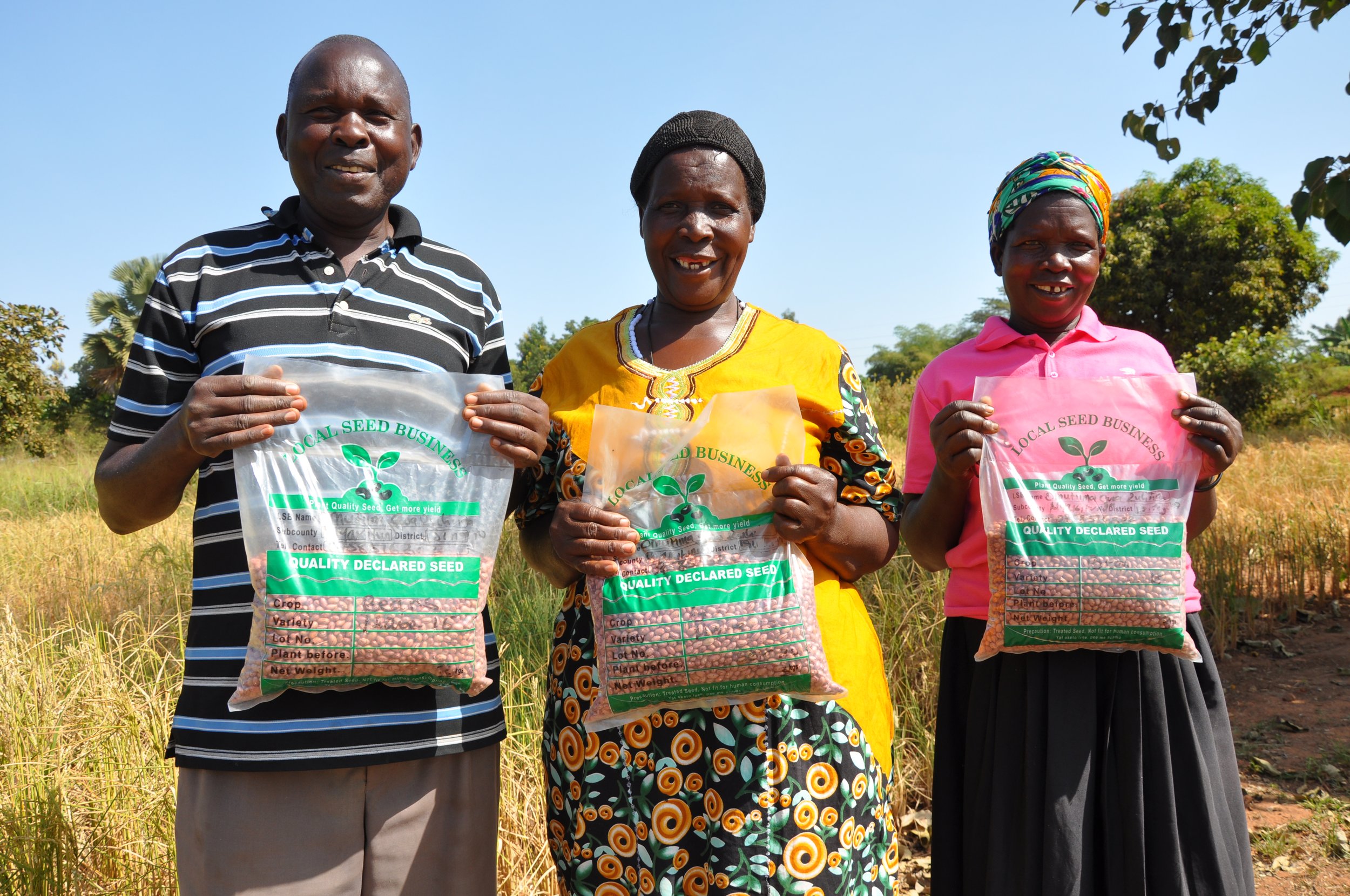
These local seed businesses - groups of trained farmers producing and marketing quality seed within their communities - proved especially effective in meeting the needs of smallholder farmers. Their proximity to local markets, lower overhead costs, and responsiveness to local preferences enabled them to profitably supply crops that were otherwise neglected by larger companies. Under ISSD Plus, the local seed business model was rolled out nationally, with support for quality assurance systems and access to early generation seed. Importantly, the project also emphasized demand creation, recognizing that availability alone would not lead to uptake without farmer awareness, training, and trust in the value of quality seed.
A key innovation under ISSD Plus was the introduction of Dutch vegetable varieties to the Ugandan market: the project partnered with six Dutch seed companies, including Enza Zaden, Bejo Zaden, East-West Seed, Rijk Zwaan, Bakker Brothers, and Syngenta. Together, they piloted commercial demonstrations and facilitated farmer training. These partnerships helped build awareness of the benefits of high-quality vegetable seed and improved cultivation practices. In several cases, the uptake of these varieties surpassed expectations, with some tomato and onion cultivars gaining rapid popularity and contributing significantly to household incomes and local market activity.
ISSD Plus brought together a broad coalition of partners spanning research, regulation, implementation, and the private sector. The National Agricultural Research Organization (NARO) played a central role in the production of early generation seed, while the Ministry of Agriculture’s National Seed Certification Services (NSCS) supported regulatory oversight. Numerous local NGOs and civil society actors were involved in field-level implementation and farmer training. Project coordination was initially handled by Wageningen UR Uganda, which later transitioned into the independent NGO ISSD Uganda, ensuring continuity after the conclusion of Dutch funding in 2021.
One of the project’s most significant achievements was the support to the successful integration of farmer-led seed enterprises into Uganda’s formal seed policy. At the outset, draft national policy only recognized certified seed from registered companies, leaving no space for quality declared seed produced by organized farmer groups. Many formal seed sector actors initially viewed these enterprises as unwanted competition. However, ISSD Plus facilitated extensive stakeholder consultations to clarify that these groups focused on different crops, often those overlooked by commercial portfolios, and served different markets. This process of dialogue and consensus-building culminated in the 2018 revision of Uganda’s seed policy, which formally recognized quality declared seed as a distinct seed class, marking a milestone for inclusive sector development.
The local seed business methodology championed by ISSD Plus proved not only effective but also sustainable. By supporting farmers to operate as entrepreneurs rather than beneficiaries, the project helped establish enterprises that continued functioning beyond the project’s lifetime. These businesses were rooted in their communities, motivated by economic viability, and equipped with the skills to produce and market high-quality seed. In some cases, the quality of seed produced by these farmer-led enterprises even well beyond the minimum threshold levels, prompting some firms to contract them as producers. This blurred the lines between formal and informal systems in practice, demonstrating their potential to complement one another. At the same time, the increased availability of quality declared seed, made possible by these enterprises, contributed to reducing seed fraud, including the repackaging and sale of untreated grain as certified seed.
Despite its successes, ISSD Plus also faced important limitations. The project’s €11 million budget, while substantial, was not sufficient to achieve full national coverage, and some regions of Uganda remained outside the scope of the project. Public sector constraints also posed challenges, particularly in the areas of inspection, testing, and certification, where government agencies often lacked the resources to meet growing demand. While ISSD Plus supported capacity building within these systems, sustained improvements will require continued seed sector investment and coordination beyond the life of the project.
After the close of the project in 2021, Wageningen UR Uganda transitioned into ISSD Uganda, an independent local NGO established to carry forward the legacy of ISSD Plus. While seed remains at the core of its work, ISSD Uganda now engages in broader sector development and supports other organizations in adopting the local seed business methodology. The team continues to collaborate with Wageningen University and other partners and has secured funding from a range of international donors. One area of continued innovation has been the development and rollout of a seed tracking and tracing system, initially started under ISSD Plus and later expanded with support from SeedNL’s Seed Laws Toolbox.
The ISSD Plus experience offers valuable lessons for seed sector development more broadly. It demonstrated the value of a multiple seed systems approach tailored to the realities of smallholder farmers, and underscored that improving access must go hand in hand with stimulating demand. It also highlighted the power of inclusive, multistakeholder collaboration, not only to drive innovation, but to shift policy and practice. The project also showed that when farmer-led enterprises are treated as legitimate actors in the seed system, they can make lasting contributions to food security, resilience, and rural livelihoods.
Contact:
Christine Kawuma Menya, ISSD Uganda
christine.menya@issduganda.org