

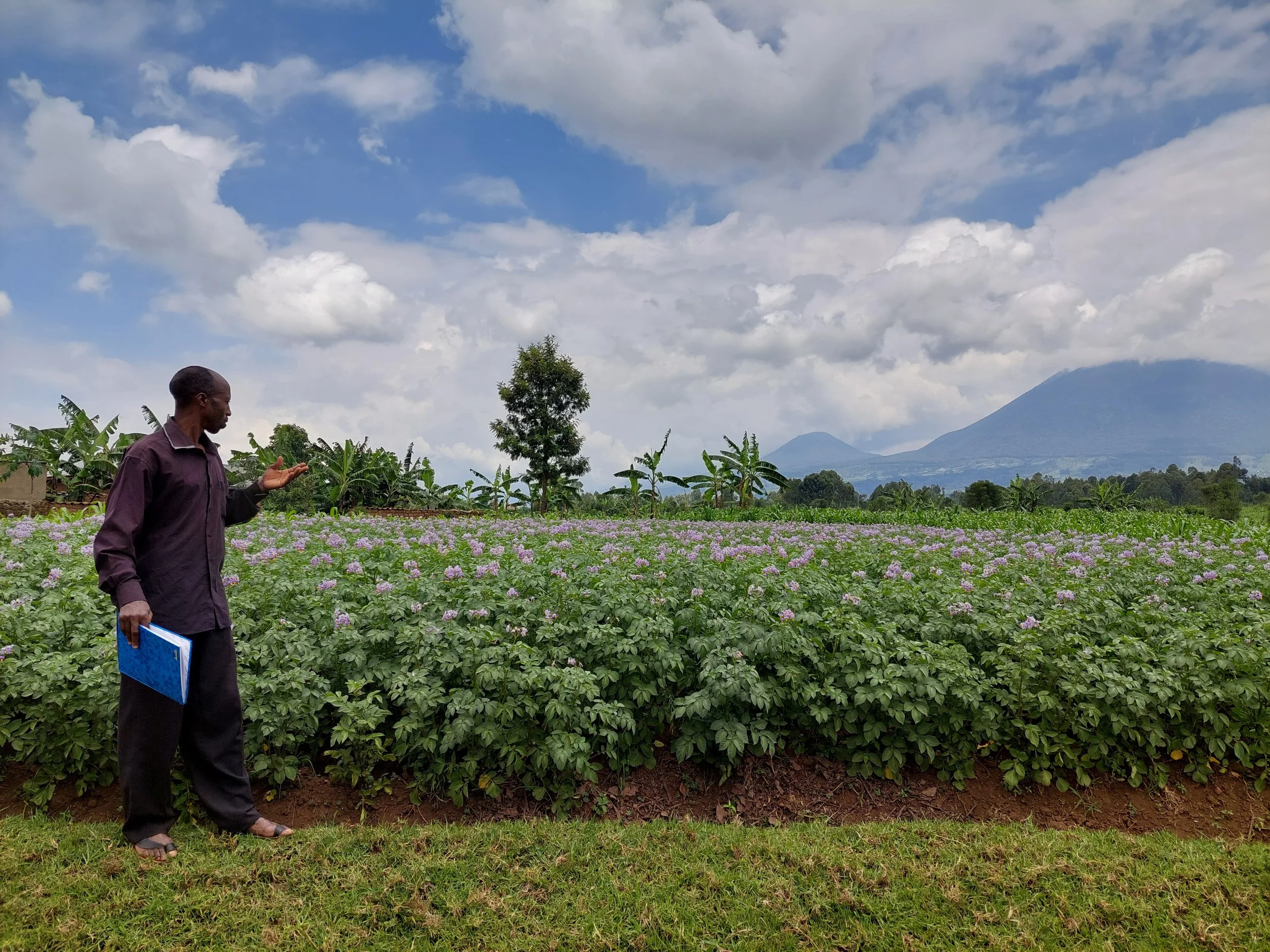
Increased Potato Value Chain Efficiency in Great Lakes Region
Fact sheet:
Funding instrument: RVO - Sustainable Development Goals Partnership (SDGP)
Budget: €2,500,000
Timeline: July 2019 – September 2023
Implementors: Delphy (lead), Seed Potato Fund (SPF), Hollanda FairFoods, MoneyPhone, Agriterra, Ministry of Agriculture and Animal Resources (MINAGRI)
In Rwanda’s northern highlands, potatoes are more than a staple - they are a cornerstone of food security and rural livelihoods. Recognizing the crop’s significance, the “Increasing the Efficiency of the Potato Value Chain in the Great Lakes Region” project was launched in July 2019 and spearheaded by Delphy. With funding from the Sustainable Development Goals Partnership (SDGP), a programme from the Netherlands Enterprise Agency (RVO), commissioned by the Netherlands’ Ministry of Foreign Affairs, this €2.5 million initiative aimed to fortify both seed and ware potato value chains over a four-year period, concluding in September 2023.
The project's consortium brought together a diverse group of stakeholders: Delphy led the initiative, providing agronomic expertise and coordinating field activities; Seed Potato Fund (SPF) focused on quality seed production; Hollanda FairFoods enhanced processing capacities, transforming harvested potatoes into high-value products; MoneyPhone facilitated financial inclusion; Agriterra strengthened cooperative structures; and Rwanda's Ministry of Agriculture and Animal Resources (MINAGRI) offered policy support and alignment with national agricultural strategies.
A significant milestone was the establishment of an aeroponic seed multiplication facility by SPF, capable of producing 560,000 minitubers per season. This innovation addressed the chronic shortage of quality seed potatoes, a bottleneck that had long hindered productivity. Concurrently, farmer training programs emphasized good agricultural practices, pest and disease management, and post-harvest handling, leading to yield increases from an average of 10–12 tons per hectare to over 20 tons per hectare for participating farmers.
Financial barriers were tackled at multiple levels. At the farmer level, partnerships with MoneyPhone provided tailored financial products to cooperatives and their members, enabling access to inputs and promoting financial literacy. Within the value chain, Hollanda FairFoods played a critical role in taking up the new, high quality harvests consistently, processing them locally to add further value to the system. At the institutional level, the RVO co-funding was instrumental in unlocking larger-scale investments by the project’s implementing partners. Many of the essential upgrades - such as infrastructure for seed storage and processing, or the establishment of aeroponic facilities - required substantial capital that local partners could not have provided on their own. Commercial lending in Rwanda often comes with prohibitively high interest rates, making grant-based co-financing not just beneficial but necessary. The RVO contribution de-risked these investments, catalysed implementation, and allowed for long-term improvements to be made that continue to benefit the potato value chain, and those depending on it, beyond the project’s end.
The project's holistic approach also emphasized inclusivity. Special attention was given to empowering women and addressing gender dynamics within the cultural context of Rwanda. While both men and women are actively involved in farming, financial decision-making is often reserved for men. To navigate this sensitively, the project developed financial tools that enabled women to register independently -often still under their husband's name - but in ways that facilitated their engagement without disrupting prevailing social norms. This approach allowed women to gain more visibility and influence in financial processes, contributing to greater gender inclusivity in the sector, while respecting and working within local cultural frameworks, rather than imposing external norms. The project also placed emphasis on engaging youth, ensuring they had access to training, resources, and decision-making processes. This focus not only promoted equity but also tapped into the potential of these groups to drive innovation and adoption of best practices.
Challenges were not absent. At the onset of the project, an unexpected partner change had to take place, after an issue with obtaining a license to operate in Rwanda. The COVID-19 pandemic further disrupted supply chains and limited field activities. Additionally, aligning the diverse objectives of consortium partners required continuous dialogue and flexibility. However, the strong foundation of trust and shared vision among stakeholders facilitated adaptive management and sustained progress.
Several important lessons emerged from the implementation of this project that may benefit similar seed sector initiatives. First, the importance of clear and continuous communication cannot be overstated - especially when working with diverse partners with differing institutional cultures and mandates. Establishing mutual understanding of roles, responsibilities, and timelines early on proved critical. Second, integrating financial literacy training and cooperative structures helped bridge the trust gap between farmers and financial institutions, enabling broader access to credit. Third, regulatory readiness is key in cross-border projects: understanding local legal frameworks and licensing requirements in advance could help avoid delays and reconfigurations. Finally, designing interventions that are culturally informed, such as gender-sensitive financial tools, enabled the project to drive change while maintaining local legitimacy.
By its conclusion, the project had made significant strides in transforming Rwanda's potato sector. Beyond tangible outputs like increased yields and improved seed quality, it fostered a collaborative ecosystem that bridged gaps between farmers, processors, financiers, and policymakers. The lessons learned underscore the importance of integrated value chain development, stakeholder engagement, and adaptability in achieving sustainable agricultural transformation.
Contact:
Peace Quadt, Delphy
p.quadt@delphy.nl