

Dutch Potato Organisation (NAO)
When Karst Weening spoke to SeedNL, he was approaching the end of almost thirteen years with the Nederlandse Aardappel Organisatie (NAO). It is a fitting moment to look back. His career has moved between international development, research and the private sector, from work in Cameroon and Bangladesh to Wageningen University & Research and Dutch companies. For Weening, who originally comes from Friesland, joining the potato sector also felt like something of a return to his roots.
At NAO, where he works as a policy specialist, that international experience has been particularly relevant. The Dutch potato sector may be highly developed, but taking its varieties, knowledge and businesses into new markets is rarely straightforward. Weening’s experience has taught him that developing a potato sector takes patience, workable regulation and, above all, the right relationships.
Representing a highly specialised potato sector
NAO is the Dutch trade association for companies active in seed and ware potatoes. Its work ranges from phytosanitary and quality issues to market and chain questions, training, certification and facilitating joint projects. International market access is an important part of that picture.
Weening describes the Netherlands as the “Silicon Valley of the potato”. The phrase reflects more than export performance. In his view, Dutch strength comes from the combination of professional breeding, specialised growers, practical experience and a long-established system around quality and plant health. He particularly values the interaction between formal breeding and growers’ practical knowledge. Laboratories can screen material for characteristics such as disease resistance, but there is also a strong tradition of people who simply know potatoes extremely well and enjoy experimenting with them. That combination of science and what Weening calls the growers’ “green fingers” is difficult to reproduce overnight.
Plant health is especially important for potatoes. Because seed potatoes are multiplied vegetatively, diseases can accumulate from one generation to the next. Strong phytosanitary systems are therefore fundamental to producing and trading reliable seed potatoes.
When regulation becomes the bottleneck
The same rules that protect quality can, however, become an obstacle when procedures are slow or poorly suited to local realities. Variety registration is one example. Weening has seen processes in which new varieties remain trapped in registration processes for many years. For a company considering investment in a new market, that has significant practical consequences. It delays the point at which a variety can be commercialised and makes an already long-term investment still harder to justify.
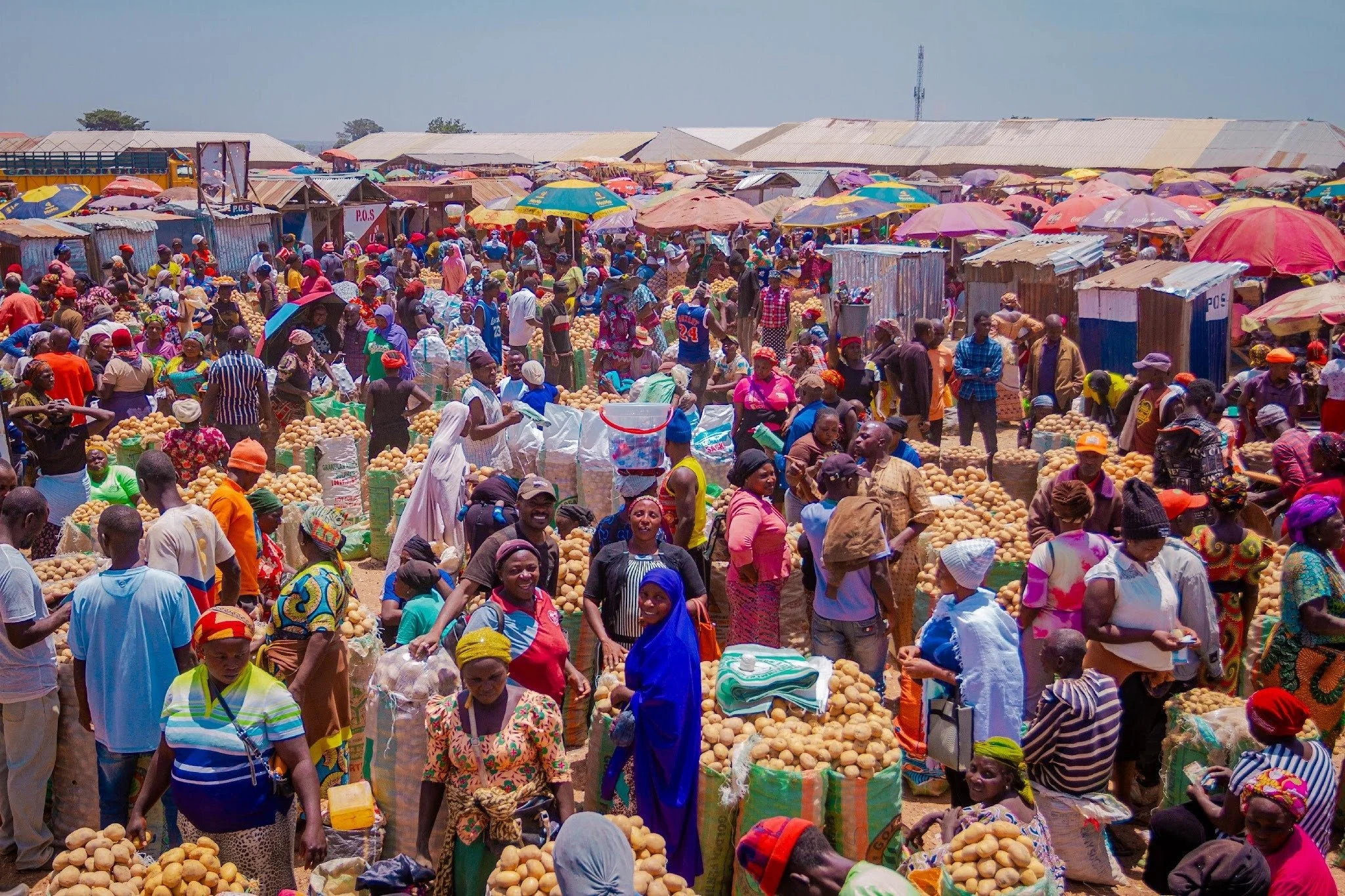
Nigeria provides a more encouraging example for Weening. NAO has been engaged with the country’s potato sector for years, and he sees recent developments as the result of groundwork laid over a much longer period. In his experience, the Nigerian process has become more pragmatic, with greater attention to what is workable for the development of the sector as a whole. That kind of progress is not always easy to attribute to one project or one organisation. Much of the work consists of maintaining contacts, explaining the commercial perspective, connecting people who would not otherwise meet and returning to the same issues over several years. For Weening, that makes Nigeria an important example of how seed sector development often works in practice. The visible results may come late, while much of the work that made them possible happened years earlier.
Potatoes require a long horizon
There is another reason patience matters: building a seed potato business locally takes time. Compared with many vegetable crops, seed potatoes require a multiplication process in which several generations may pass before there is sufficient material for commercial sale. Companies therefore have to invest before they can expect significant returns. “You need to look ahead to make a profit,” is the essence of Weening’s argument.
That reality shapes which companies are able to enter emerging potato markets. Larger firms may have the resources to make a long-term investment. Others may be interested but lack the capacity to stay involved for the time required. Companies also have different business models and priorities. Some may be focused on supplying processing industries, while others are more interested in markets that include smaller-scale farmers. For NAO, representing a sector rather than a single company means taking those differences seriously. A market may be highly relevant to one member and much less so to another. One company may already have a local presence while another is still exploring opportunities. Part of NAO’s role is therefore judging where there is enough shared interest to act collectively.
Business-to-business first
That commercial perspective also shapes Weening’s view of partnerships. For private companies, he says, the most important partnerships are often business-to-business. A reliable local commercial partner can provide the basis for distribution, investment and a relationship that lasts long enough for the potato sector to develop.
Other partners have different roles. An NGO, for example, may be useful for knowledge dissemination or farmer outreach. Governments and regulatory organisations become essential when the main constraint is variety registration, phytosanitary requirements or another part of the enabling environment. These are also areas where companies that compete commercially may nevertheless have a common interest. A workable regulatory framework benefits the sector as a whole. This is where Weening sees an important role for SeedNL.
Getting everyone around the same table
NAO is one of the partners behind SeedNL, alongside Plantum and the Dutch Ministries of Foreign Affairs and Agriculture, Fisheries, Food Security, and Nature. For Weening, one of the partnership’s most useful functions is straightforward: it creates a place where public and private actors can compare perspectives before an initiative goes too far. He has seen what happens when that consultation is missing. Projects can move ahead with support from one or two parties while companies, ministries or knowledge organisations have reservations that have never been properly discussed. By the time those differences become visible, money and time may already have been committed.
Past failures have therefore produced useful lessons. Weening values SeedNL not only when it helps a new initiative get started, but also when bringing the right people together reveals that an idea needs to be changed or should not proceed at all. Avoiding an ill-designed project can be just as valuable as launching a new one.
Nigeria again stands out for him because relationships have been built over time and different actors have increasingly been brought into the conversation. It illustrates a broader lesson from his years at NAO: potato sector development is rarely something that can be organised through a short project cycle. The commercial relationships need to work. Regulations need to be workable. Companies need sufficient confidence to invest. Public partners need to understand how the private sector operates. And all of those pieces have to remain connected for long enough to produce results.
As Weening prepares to leave NAO, that may be one of the clearest lessons from his experience: in potatoes, it pays to consult early, choose partners carefully and be prepared to stay for the long term.