

Solana
For this blog, we interviewed Willem Nammensma, Branch Manager, and Dirk van Dijken, Seed Material Coordinator at Solana.
Willem has been working with Solana for two years and is responsible for the Solana Holland subsidiary, which focuses on seed potato production. What inspires him most is the importance of Dutch agriculture as a foundation for potato consumption worldwide.
Alongside him, Dirk has been with Solana for two and a half years and is responsible for the seed potato multiplication area within the Netherlands. For Dirk, it is the dynamic atmosphere of the potato sector worldwide that makes the work particularly inspiring - it never stops!
Solana Holland creates, produces and sells seed potatoes worldwide. Founded in 1937, it has been part of the Solana Group since 1987, an independent, family-owned potato breeding company based in Germany and one of the few in the seed sector that remains family-owned. The Group has subsidiaries across Europe, Latin America and Turkey, and works through partnerships in other regions.
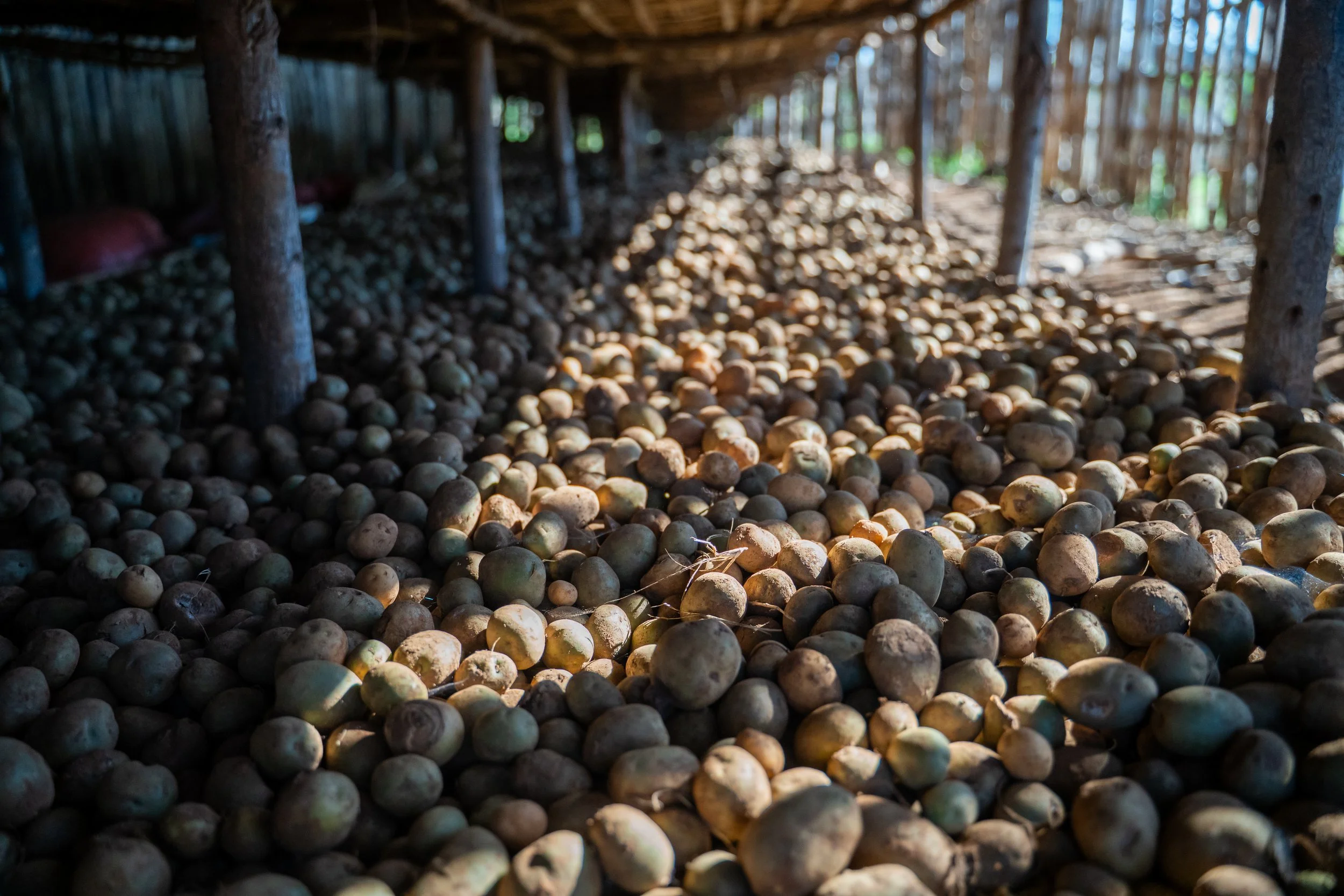
From breeding stations in Emmeloord and Germany, Solana develops new potato varieties for different climates and regions, with resistance as an important selection criterion. In the Netherlands, an energized team of 19 colleagues mainly coordinates seed potato production on farms and sales. Solana Holland produces over a thousand hectares of seed potatoes, starting from minitubers and multiplying them into export-ready material that meets NAK certification requirements.
Get to know more about Solana
Developing varieties for different markets
Solana’s market is roughly 50% table potatoes and 50% processing varieties for French fries and chips. There are many more varieties in the table market, as preferences differ between clients and countries. For processing, factories tend to work with fewer varieties, as they do not want to change varieties frequently.
Solana develops its varieties in-house through breeding programmes in the Netherlands and Germany. A large number of crosses are made each year and planted in the field, where breeders and product managers evaluate them throughout the season and select those with the most potential for different markets. In developing new varieties, Solana tries to stay ahead of changes in legislation and climate, including by selecting for more drought- and disease-resistant varieties.
Once a variety is registered, it can be produced for the market. How long this takes depends on the country! Within the EU, registration can move relatively quickly, while in all countries outside of the EU they need to be registered additionally on a specific variety list. Depending on the country, this can take from a couple of months to a couple of years. Solana carries out most of these processes together with its local agents.
Solana’s contributions to farmer’s livelihoods and food security
For many farmers, the high price and limited availability of quality seed potatoes means they rely on their own stock for the next season, with the quality degrading over time. Solana sees more disease-tolerant and resistant varieties as one way to give farmers more security: with reliable seed and varieties that are less affected by disease, a larger part of the harvest can be secured.
Resistant varieties often require fewer inputs and help provide a more stable income, with fewer large swings between good and bad seasons. This is particularly important in potato production, where an easy season can result in high production but low prices for all farmers, while a difficult season can mean very low or no harvest.
A milestone we’re proud of
“For Solana Holland, this year is the first time we reached a thousand hectares! - And also that last year we celebrated our 120th anniversary!”
Solana and Seed Sector Development
The role that Solana plays in Seed Sector Development
Solana works in different countries to introduce varieties that are more resistant to drought and disease and better fit local needs. In Nigeria, for example, Solana introduced the blight-resistant variety Connect in 2017. According to Solana, potatoes from that initial introduction are still being grown today. More recently, two additional varieties, Dior and Gaya, have been introduced and are currently going through the registration process.
Developing a new variety can take around ten years. This means Solana needs to think about what countries and their potato sectors will need ten years from now. Breeding is becoming increasingly data-driven, but good insights from the countries themselves remain important to understand where varieties will fit best. For this, Solana relies on its partners and subsidiaries to share information from different markets, allowing the breeding programme to adapt and develop varieties for future needs.
What is this work important to Solana
Solana’s turnover currently comes mostly from developed and established markets, but the company also sees growing potential in emerging markets such as Nigeria and India. While established markets will continue to develop their own breeding and production programmes, demand for quality seed and new varieties is growing in many emerging markets.
This represents an opportunity to be ready for the future. Large and growing markets such as Nigeria and India offer significant potential, but also require different ways of working. Export is not always possible, registration requirements can be unclear, and in some countries Solana needs to work through licensing agreements and local production. Building these relationships and understanding how these markets develop is therefore important for Solana’s longer-term presence in the seed sector.
The challenge of remaining competitive
One of Solana’s biggest challenges is the cost of producing seed potatoes in Western Europe. Strict regulations on plant protection, combined with high costs for fertilizer, crop protection and labour, make production relatively expensive, particularly when the seed then needs to be exported to markets on the other side of the world. At the same time, production in other countries, including China, is increasing rapidly.
For Solana, there is a balance between paying farmers the highest possible price and keeping seed potatoes competitive in international markets. The company sees that Europe still has a head start, including through highly efficient production and favourable conditions for good yields, but that this advantage is becoming smaller as other parts of the world develop quickly. Keeping ahead of this competition while working under increasingly strict regulations remains an important challenge.
Working with SeedNL and the power of Partnerships
‘Having a strong local partner is important when working in different countries’. Potato production involves many details that need to be understood and observed locally, from farmers’ needs to growing conditions and practices. Solana therefore works with and trains local agents, who can then support and train farmers in their own context and language. This also creates an important flow of information back to Solana about what is happening in the market and what farmers need,‘while opening up opportunities to further explore how SeedNL could support in responding to these needs and strengthening local partnerships.