

Accelerating Agriculture and Agribusiness in South Sudan for Enhanced Economic Development (A3-SEED)
Fact sheet:
Funding Instrument: DGIS via Embassy of the Kingdom of the Netherlands in Juba
Budget: €8.5 million
Timeline: December 2020 – November 2025
Implementors: IFDC (lead), KIT Royal Tropical Institute
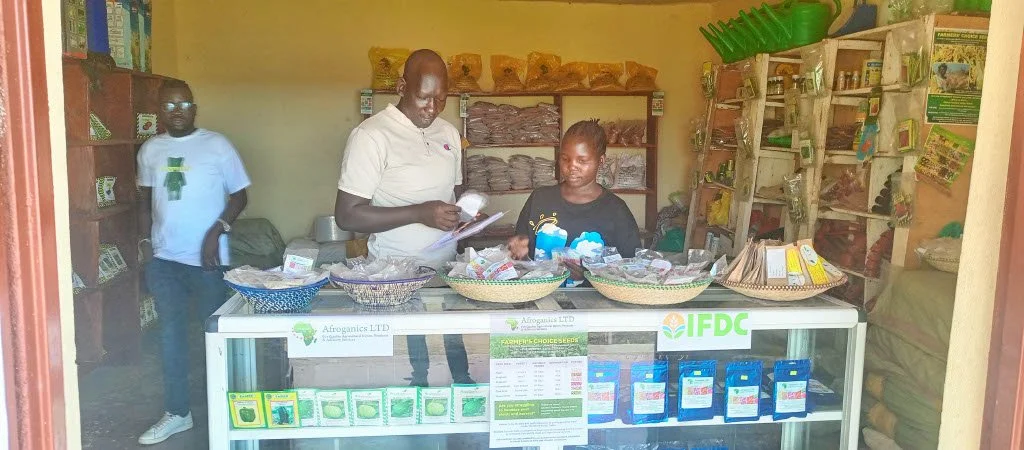
The Accelerating Agriculture and Agribusiness in South Sudan for Enhanced Economic Development (A3-SEED) project is helping reshape South Sudan’s seed sector into one driven by the market and capable of local production. Launched in late 2020 with Dutch funding and implemented by IFDC and KIT, A3-SEED focuses on supporting local seed companies to expand their production, build their capacity, and connect more effectively to agro-dealers and farmers. In a country where nearly all seed was once imported, especially from Uganda, the project has enabled a shift: now at least 35% of seed used is produced domestically.
The project’s ambition is not limited to seed production alone. It works across the seed value chain: supporting extension systems, promoting seed marketing, and strengthening the South Sudan Seed Trade Association (STASS). A network of six hubs across three states acts as the operational backbone, through which extension services, quality control, and training are delivered. These hubs are helping seed companies and government agencies alike develop the capacity to manage quality seed systems and reach farming communities, including via village agents and radio jingles that inform farmers about the benefits of quality seed.
One of A3-SEED’s central challenges has been operating in a fragile context marked by limited infrastructure and ongoing security concerns. The project is active only in areas where conditions allow for consistent engagement, and even there, it must navigate constraints such as limited extension capacity and under-resourced institutions. Despite these challenges, collaboration with public counterparts - including the Ministry of Agriculture and the Seed Quality Control Board - has been constructive. Authorities have provided political backing and created space for implementation, even when logistical and financial resources are stretched.
Another sensitive challenge has been navigating the tension between seed aid and private sector development. South Sudan has long depended on aid-based seed distribution, led by actors like FAO. A3-SEED worked with these partners to encourage a transition - enabling South Sudanese seed companies, rather than foreign suppliers, to meet the needs of humanitarian procurement wherever possible. A stakeholder workshop helped define a shared strategy, aiming to phase in commercial seed systems without jeopardizing food security. The results so far show that when quality seed is available and trusted, farmers are willing to buy it, even in contexts where free distribution has been the norm.
From the outset, the project made a conscious effort to integrate both formal and informal parts of the seed system, linking seed production with outreach and last-mile delivery. Not every approach achieved its full ambition, but useful lessons were learned. For example, attempts to make the national seed trade association (STASS) financially self-sustaining through member contributions proved difficult to implement. Likewise, there was room to do more on applied research. Testing local varieties alongside hybrids from Uganda and Kenya, and working more closely with university breeders, could have brought valuable insights. A breeders’ association and national database are still seen as promising goals for the future.
Still, the project has made strategic choices that are paying off. Its focus on supporting seed companies has been particularly impactful. By co-investing in their growth, and gradually shifting marketing and extension responsibilities to them as part of the exit strategy, A3-SEED is laying the groundwork for a sector that can stand on its own. Building on earlier Dutch-funded efforts, the upcoming evaluation will help determine whether and how a second phase could complete the transition.
As discussions continue about the possible relocation of the Dutch embassy, questions have been raised about how future coordination will unfold. Yet the momentum A3-SEED has created - bringing together actors from across the system, even in a fragile context - offers strong grounds for optimism. With the right support, South Sudan’s seed sector can grow not only in volume but also in resilience, quality, and inclusivity.
Contact:
Lubajo Bosco Kwalingo, IFDC
LKwalingo@ifdc.org