

Climate Resilient Agribusiness for Tomorrow (CRAFT)
Fact sheet:
Funding Instrument: Ministry of Foreign Affairs - DGIS
Budget: €40 million
Timeline: June 2018 – December 2025
Implementers: SNV, Wageningen University and Research, CGIAR (AICCRA), Agriterra, Rabobank
Launched in 2018, the Climate Resilient Agribusiness for Tomorrow (CRAFT) project set out to test whether targeted financial incentives could encourage local agribusinesses to co-invest in climate-smart agriculture By supporting companies willing to work directly with smallholder farmers, the project aimed to boost the adoption of climate-smart practices and technologies, strengthen supply chains for climate-relevant crops, and reduce production risks for both farmers and businesses. At its core, CRAFT sought to make climate resilience a shared economic interest across the value chain.
CRAFT employed a private sector-led approach, promoting viable business cases that were climate-smart, inclusive, and scalable, offering clear value to smallholders and businesses alike. While quality seed inputs played a role, the project promoted a broader range of climate-smart practices beyond seed alone.
The project was implemented through a consortium led by SNV, with Wageningen University and Research (WUR), CGIAR (CCAFFS/AICCRA), Agriterra, and Rabobank each contributing specialised expertise. SNV oversaw project coordination, grant management, and implementation with selected agribusinesses and cooperatives. WUR and CGIAR provided climate research and projections to guide agricultural planning, while Rabobank worked with local financial institutions to adapt services to climate risks. Agriterra supported farmer cooperatives in strategic planning and governance. In the extended phase running through 2025, only SNV and Agriterra remain formally engaged, with WUR continuing a more limited role focused on short-term climate projections.
CRAFT’s objectives were threefold. First, to increase the adoption of climate-smart practices and technologies among farmers and agribusinesses by demonstrating their economic and agronomic benefits. Second, to catalyse investment and business growth in climate-relevant value chains through targeted co-investment schemes. Thirdly, to foster an enabling environment that supports the broader uptake of climate-smart agriculture through policy engagement, climate data tools, and strengthened local institutions
CRAFT’s interventions spanned several priority value chains, including potato, common beans, sorghum, sunflower, soybean, sesame, and green gram. In Tanzania, for example, the project worked with the Isowelu cooperative in Njombe to strengthen the climate resilience of potato farmers. Through improved practices and inputs, yields increased from 5 to 7.5 tonnes per acre - a tangible demonstration of the potential returns from climate-smart agriculture.
A cornerstone of CRAFT’s strategy was its Climate Innovation and Investment Facility (CIIF), which provided grants to agribusinesses and cooperatives willing to co-invest in climate-smart agriculture. These grants helped de-risk investments in improved seed, soil testing, and adaptive technologies, with co-financing structured to ensure strong local commitment. By supporting interventions with a clear business case, the facility catalysed over €19 million in private sector investment and reached more than 266,000 farmers across East Africa.
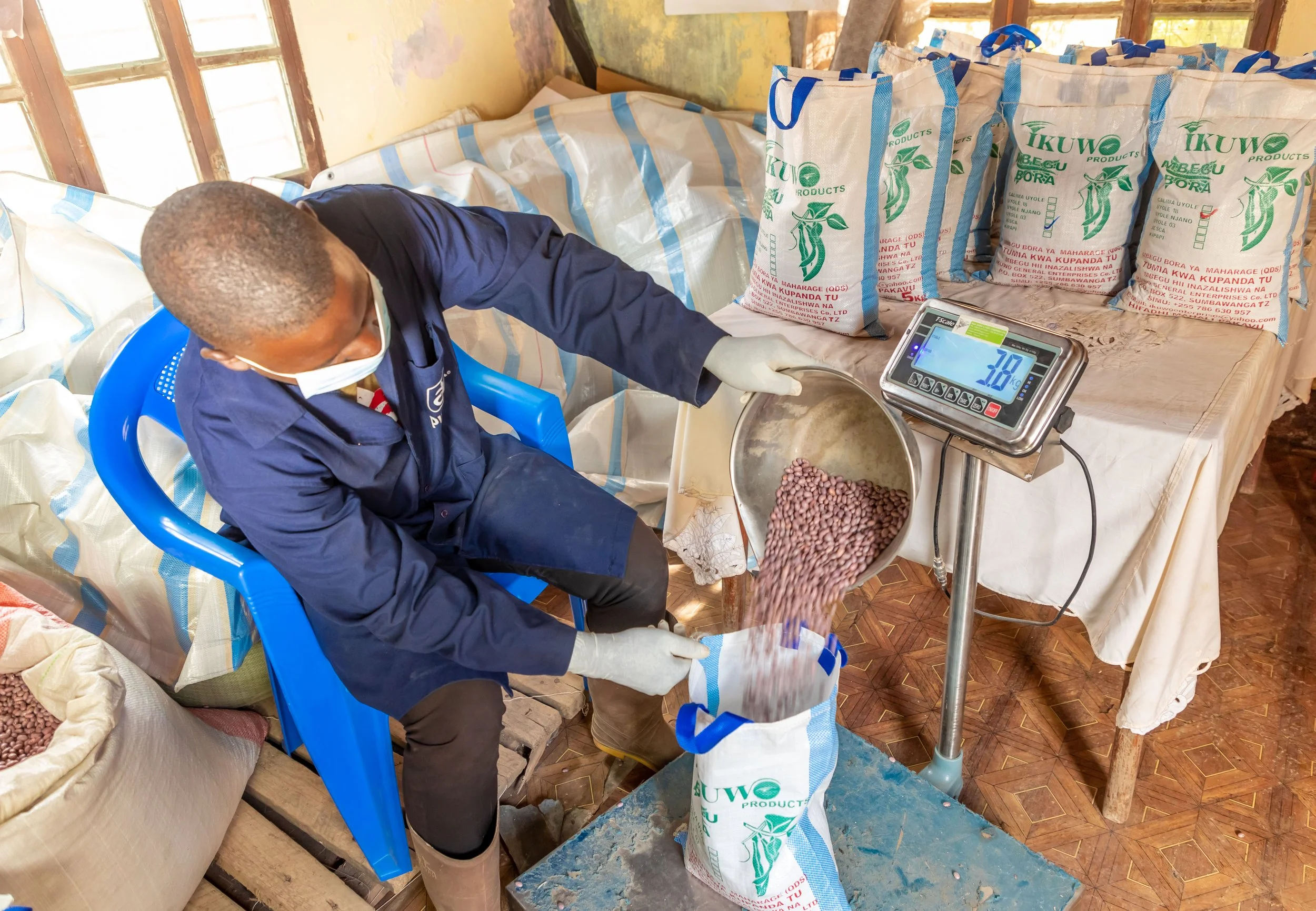
Over the course of the project, CRAFT worked with 56 agribusinesses, cooperatives, and service providers, and supported them in implementing climate-resilient practices across selected value chains. Through these partnerships, the project reached approximately 300,000 smallholder farmers. While outcomes varied by crop (value chain) and context, farmers consistently reported increased production and improved margins - especially in potato value chains. Beyond numbers, the project’s greatest impact lay in changing mindsets: helping farmers see that investing early in inputs like improved seed and soil testing could pay off later in the season. These shifts were reinforced by training delivered through cooperatives, demonstration plots, and lead farmer networks.
Gender Equality and Social Inclusion (GESI) was a cross-cutting pathway throughout CRAFT, alongside knowledge development and learning. The project aims to include at least 30% women and youth in its interventions, leading to notable achievements such as increased voice, agency, and income among female and young farmers. Women and youth also took on leadership roles in SMEs and engaged in service provision and employment in areas like seed processing and marketing.
Despite these successes, seed-related challenges persisted. While improved seed was central to many of the promoted climate-smart practices, local production and storage capacity lagged behind rising demand. The absence of reliable storage infrastructure meant that even when better varieties were available, consistent supply remained elusive. Collaboration between Dutch and local seed companies was seen as essential - particularly to navigate regulatory requirements and build local multiplication capacity - but progress in this area was slower than hoped, often limited by scale, administrative hurdles, and uneven incentives. These bottlenecks reinforced the importance of long-term partnerships and policy engagement to build robust local seed systems.
Another lesson emerged around value chain selection. In some cases, focusing too narrowly on a single crop proved limiting. Farmers need diversified farming systems to build true resilience, especially in regions with multiple growing seasons. Future interventions would benefit from designing from a whole-farm perspective, integrating goals such as food and nutrition security alongside market access.
As the project approaches its conclusion in 2025, CRAFT is ensuring a responsible exit. Knowledge products are being finalised, learning events organised, and successful business models handed over to local partners and financial institutions. Manuals for training and extension are being disseminated to relevant stakeholders, and business plans are being linked with investors to ensure continuation.
CRAFT’s legacy is likely to endure, with the uptake of climate-smart practices now extending well beyond the project's direct participants. This diffusion has occurred across formal, informal, and semi-formal spheres - from certified agribusinesses and regulated cooperatives to lead farmer networks, demo plots, and informal trader linkages. Such integration reflects the real structure of East African agriculture, where resilience depends not only on technical inputs or policy alignment, but also on the strength of social and market relationships. By engaging actors across these layers, CRAFT demonstrated that climate adaptation can be both system-wide and locally grounded.
SNV is a global development partner, rooted in the African and Asian countries where they operate. With 60 years of experience and a team of approximately 1,600 people, their mission is to strengthen capacities and catalyse partnerships that transform the agri-food, energy, and water systems to enable sustainable and more equitable lives for all.
Contact:
Edith Mutui, SNV
emutui@snv.org
Photo credit: CRAFT project