

Private Seed Sector Development (PSSD) Burundi
Fact sheet:
Funding instrument: DGIS via IGG FNS
Budget: €12 million
Timeline: Phase 1: November 2018 - June 2024, Phase 2: July 2024 - December 2026
Implementors: IFDC, KIT
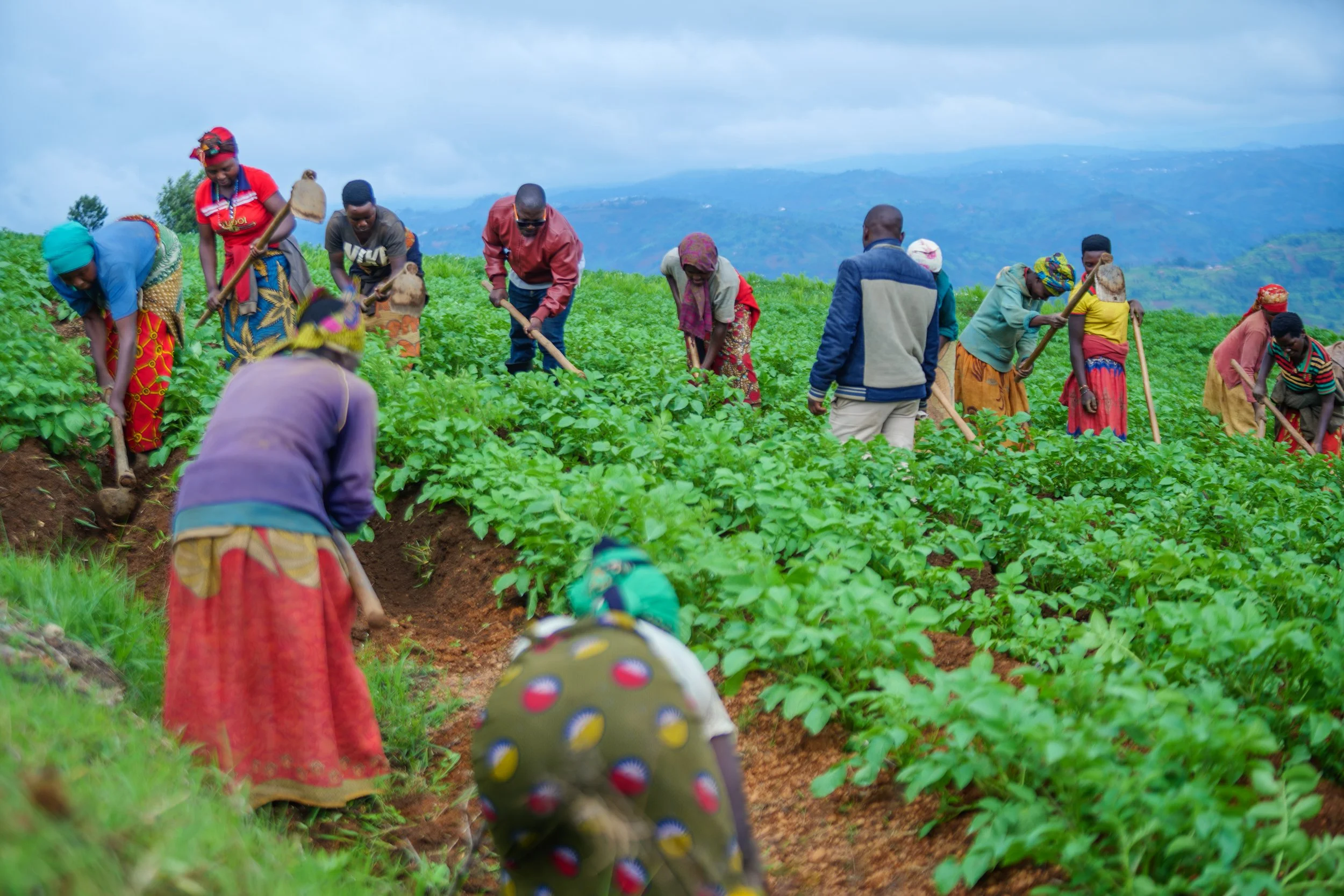
The Private Seed Sector Development (PSSD) project in Burundi is a long-term initiative supporting the emergence of a more resilient and inclusive seed system, led increasingly by private actors. Implemented by IFDC and KIT, and funded by the Ministry of Foreign Affairs through its Embassy in Bujumbura, the project builds on more than a decade of engagement in the country’s seed sector. PSSD has worked with national institutions, local entrepreneurs, and development partners to strengthen the availability, diversity, and quality of seed for Burundian farmers.
Burundi was selected for this programme based on both high farmer demand and the limited state of the seed sector at the time. When PSSD began, access to certified seed was estimated at below 3%, and formal systems for variety development, regulation, and distribution were not yet fully developed. There were institutions in place, but few mechanisms for coordination or investment. Over time, and with sustained support, certified seed access has expanded to over 20% of farmers across the country. During its first phase, from 2018 to 2024, PSSD set out to reach 178,000 farming households with quality seeds. In its second phase, from 2024 to 2026, they have added a further 220,500 farming households to this target, 31,500 of which will be trained in demonstration fields and farmer field schools, as well as 189,000 new households who will have access to and purchase certified seeds.
The project brings together a wide range of stakeholders. Public partners include the Burundian Ministry of Agriculture and its technical directorates, the national research institute ISABU, and the national certification authority ONCCS. The private sector is represented by over 100 seed entrepreneurs, ranging from cooperatives to emerging seed companies, while three national NGOs have played a crucial role in providing training and business development support. Dutch companies East-West Seed and Solynta are also involved, introducing high-quality vegetable and hybrid potato seed, through local and regional partners. These collaborations have helped to bring new, adapted varieties to market and support the diversification of seed offerings.
One of PSSD’s most notable outcomes is the strengthened role of the private sector. Where the state previously held primary responsibility for seed production and regulatory decisions, the landscape has gradually shifted toward a more participatory model. Private actors now represent around half of all stakeholders in sector coordination and decision-making forums. This evolution has been accompanied by improvements to the national seed catalog, regulatory frameworks, and certification procedures, all of which now align more closely with regional standards - creating future opportunities for regional trade and investment.
Farmers have also become more proactive participants in the system. Whereas past efforts often relied on the free distribution of seed, today many farmers are choosing to purchase certified seed based on clear benefits in yield and quality. This shift has been supported by demonstration plots, coaching, and peer learning initiatives, often facilitated by local NGOs and seed entrepreneurs, which have helped build trust and familiarity with improved varieties.
The path to these achievements has involved careful navigation of institutional dynamics. Encouraging a shift from public to private sector leadership required building consensus, clarifying roles, and supporting change at both policy and operational levels. While the sector has made considerable progress, challenges remain - including the limited availability of early generation seed, and the need to strengthen financial services and infrastructure for seed producers.
With the planned closure of the Dutch Embassy in Burundi - PSSD’s primary funder and strategic partner - the project has entered its final phase. An exit strategy is now being developed in close coordination with embassy staff, with a focus on ensuring that knowledge, relationships, and institutional frameworks built over the past years can be sustained. This includes targeted efforts to transfer responsibilities to local actors, embed project strategies within national institutions, and explore opportunities for continued engagement through other Dutch or regional initiatives.
Looking ahead, stakeholders interviewed reflected on several areas where continued attention could help build on PSSD’s foundation. These include strengthening market linkages for seed entrepreneurs, expanding the sector’s readiness for regional trade, incorporating climate-adapted seed technologies, and improving access to finance for seed businesses.
The relationships, capacities and institutional changes fostered by PSSD now provide a meaningful platform for further progress - guided by national actors and supported by the wider seed sector community. Crucially, the growth of a committed and capable private sector has helped anchor these interventions in a more sustainable system, one increasingly able to carry forward the work independently.
Contact:
Micaël Beun, IFDC
mbeun@ifdc.org