

Rebuilding Potato Ukraine
Fact sheet:
Project name: Rebuilding Potato Ukraine
Funding instrument: Ministry of Foreign Affairs through RVO - Ukraine Partnership Facility 1 (UPF1)
Budget: € 2,256,317
Timeline: January 2024 – January 2026
Implementors: Agrico Netherlands, Agrico Ukraine, APH Group
Before the Russian invasion, Ukraine stood among the world’s top potato producers. The war disrupted agricultural supply chains, increased input costs, degraded infrastructure and strained storage and distribution. To help respond to these challenges, the Dutch Ministry of Foreign Affairs, through the Netherlands Enterprise Agency, launched the Ukraine Partnership Facility (UPF). This funding instrument was created to help repair and rebuild essential sectors in Ukraine by funding partnerships between Dutch and Ukrainian organisations. Projects under UPF must deliver clear public benefits, improve resilience, and create lasting value for Ukrainian communities, supporting work that would be difficult to finance commercially in times of conflict, but still crucial for economic and social recovery.
One of the projects funded under UPF is “Rebuilding Potato Ukraine”. Implemented by Agrico Netherlands, Agrico Ukraine, and APH Group, the project intends to increase the production of high-quality seed potatoes in Ukraine. The partnership is shaped around a simple and practical structure, with a small group of actors who each contribute essential expertise. Agrico Netherlands takes responsibility for the management of the project. Agrico Ukraine, which is not a subsidiary of Agrico, but instead an independent venture with close ties to Agrico Netherlands, offers local staff, infrastructure, and networks, implementing the project on the ground. APH Group delivers equipment and training on its usage. The embassy and RVO maintain active and focused roles. By keeping the group compact, the consortium can reduce its administrative burden and thus quickly react to the changing conditions of a warzone. The Dutch public sector, namely the embassy and ministries of foreign affairs and agriculture, are highly involved and committed in their support of the project.
The project invests in a climate smart potato demonstration centre with drip irrigation, cold storage, and modern equipment. Around 100 hectares are set to be cultivated every year. The seed potatoes harvested from this area, when planted, will result in the production of an estimated 53 million kilograms of table potatoes annually - around 1.5 kilograms per Ukrainian - significantly contributing to local food security. With training of farmers being another core element, 3,000 farmers are set to receive guidance on cultivation, machinery, cold storage, regenerative practices and business finance. With many men mobilised, and women running household agricultural plots, digital training has become an important avenue for knowledge transfer. Short instructional videos and messages reach large numbers of growers who can not always safely travel. Innovations like small packages of seed potatoes with simple growing instructions on their back also contribute to reaching these farmers.
The partnership has been intentionally designed to be as lean as possible. Personnel hours are not covered by the project, but instead by the partners themselves, meaning all funding through UPF can directly be invested in Ukrainian infrastructure. This greatly simplifies the financial structure of the project and as such, reduces reporting demands. Partners value this due to the limited stability in a warzone, meaning lengthy procedures are difficult to manage. Mutual trust and clear communication are essential to the partnership’s success and adaptability. Agrico’s decades of experience in Ukraine, combined with strong personal relationships and networks built over that time, form a strong backbone to this collaboration.
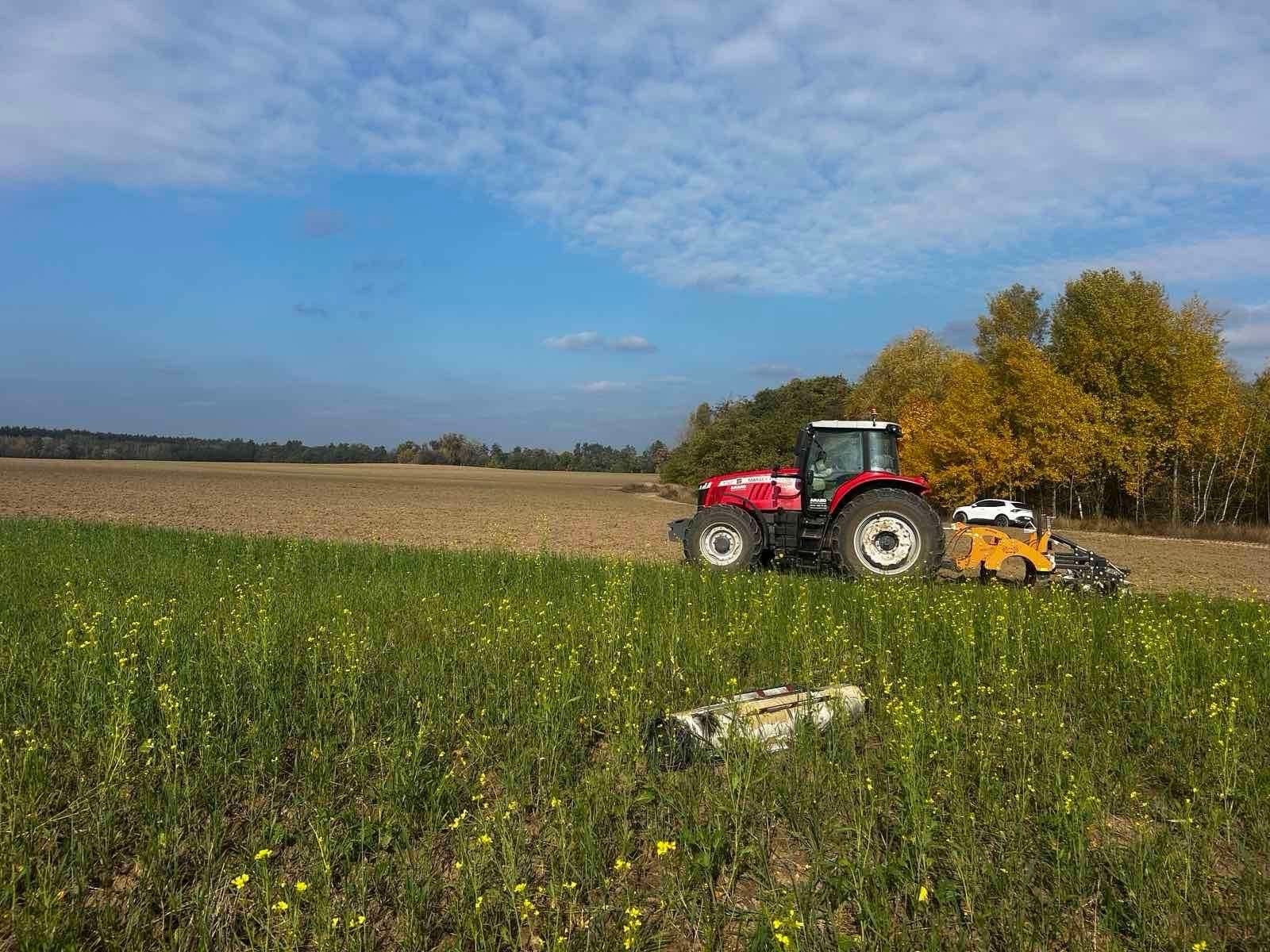
Operating in an active conflict area brings major challenges. Unexploded rockets have landed in fields, trucks with anti-drone machine guns need to be present at field demonstrations, and electricity outages require cold storage to depend on generators. The partners need to work with resilience and practical solutions, having to accept that plans often need adjustment. UPF allows for this kind of flexibility, and RVO has shown flexibility in modifying activities when conditions inevitably change. Even after the bombardment and partial destruction of the project’s facilities, the project has still managed to reach its milestones on time and within budget. The first 50 hectares were completed and operational in the first year, and another 50 were added in the next. In 2024, the project received the Flagship Award at the Ukraine Recovery Conference in Berlin.
The project shows the value of a small group of committed partners with a shared goal. Agrico stresses that reliable local leadership is essential in unstable environments, and observes the need for flexible and pragmatic programming as opposed to extensive, rigid planning. These ideas may hold relevance for seed sector development programmes for fragile countries in the Global South. A partnership structure with a limited number of experienced organisations, combined with clear responsibilities and a practical division of tasks, could support similar interventions. This would require adaptation to local realities, and success would greatly depend on trusted local partners with enough capacity to guide the work. Even so, the experience in Ukraine suggests that such an approach can offer useful lessons for fragile contexts.
Rebuilding Potato Ukraine contributes to food security during the war and strengthens the long-term resilience of the potato sector. It supports farmers, many of whom are women, through both physical infrastructure and knowledge transfer. The project highlights how targeted investment and close cooperation can maintain essential value chains during instability. It also provides insights into how lean, flexible, and locally grounded partnerships may support agricultural development in other fragile settings, provided that conditions allow and partners share the same commitment to practical execution.
Contact:
Michel de Bruin, Agrico Netherlands
M.de.Bruin@agrico.nl