

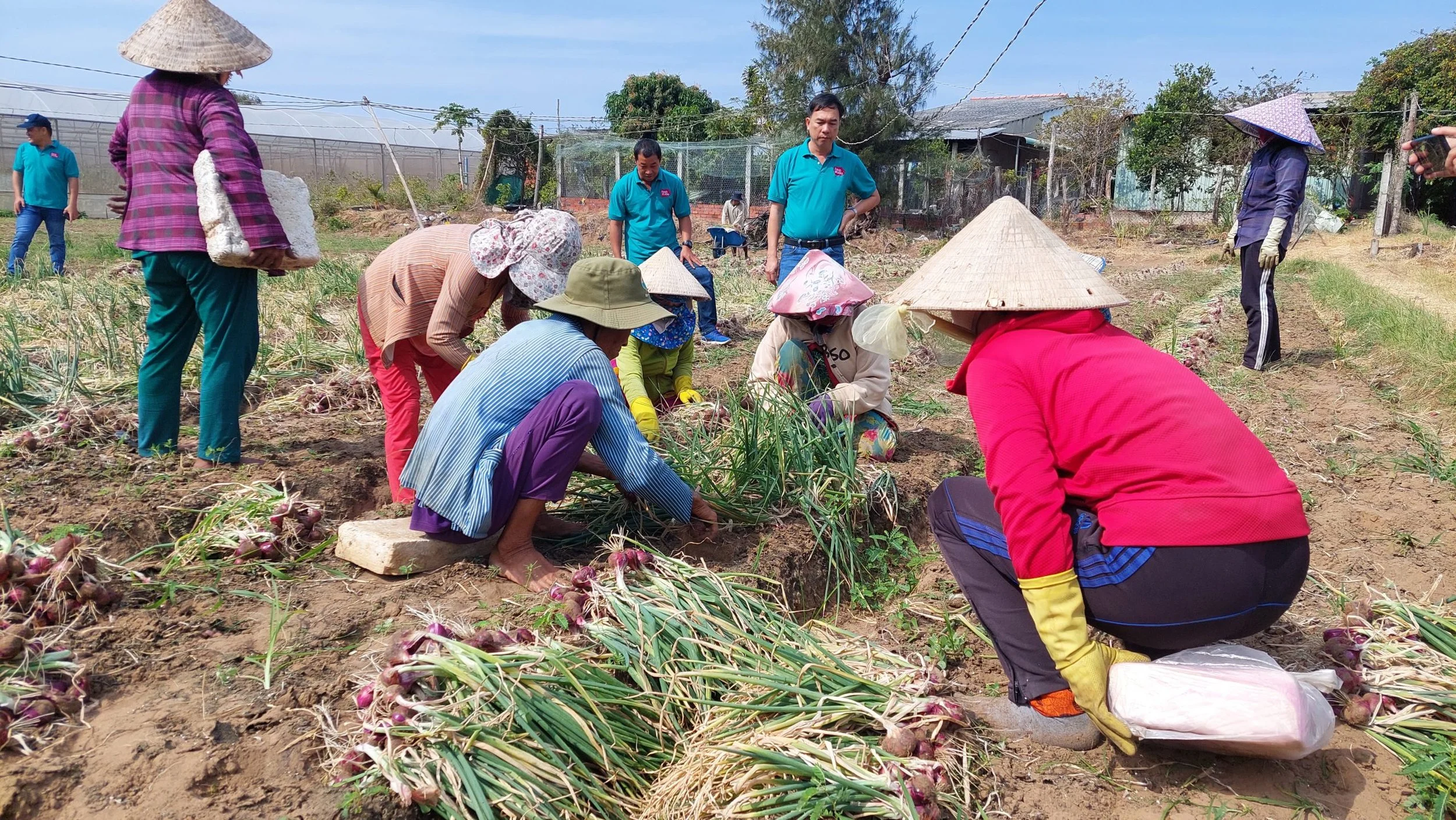
Impact Cluster: Transition towards sustainable shallot value chains in the Mekong Delta
Fact sheet:
Funding instrument: RVO: PSD Toolkit - Phase 2
Budget: €449,569
Timeline: 2021-2025
Implementors: Bejo Zaden, De Groot & Slot, Royal Brinkman, BvB Substrates, Eurofins, Fresh Studio, Can Tho University
The Impact Cluster: Transition towards sustainable shallot value chains in the Mekong Delta is a Dutch-funded initiative aimed at supporting shallot farmers in Vietnam’s Soc Trang province. The project focuses on improving both productivity and sustainability in local shallot production through the introduction of hybrid seeds and a package of modern cultivation techniques. Anchored in RVO’s Impact Clusters Programme, the initiative emphasizes practical outcomes, aligning multiple Dutch companies around shared goals in seed innovation, irrigation efficiency, and farmer training.
A core ambition of the project was to move away from the traditional practice of propagating shallots clonally through bulbs, a method that resulted in the transmission of disease and offered limited yields. Bejo Zaden led the introduction of hybrid shallots grown from seed - specifically of the tropical “Maserati” variety - which promised more consistent results and better resilience. These seeds were shown to outperform traditional bulbs by roughly 20% in terms of yield per hectare, based on extensive demonstration plots and field evaluations.
Beyond yield improvements, the project made substantial progress in addressing one of the Mekong Delta’s most pressing agricultural challenges: water use. In Vinh Chau district, where the cluster operated, 85% of farmers rely on groundwater from self-drilled wells during the dry season. Traditional irrigation methods, particularly bucket watering, are labour-intensive and result in considerable water loss - with only about 20% of applied water actually reaching the crop, according to local irrigation authorities. This not only wastes resources but also contributes to land subsidence and salinization risks, due to overextraction of groundwater. Research from Can Tho University found that replacing this system with sprinkler irrigation reduced water use by 43-59%, and increased farmer income by 20%. The introduction of drip and sprinkler irrigation through the cluster therefore not only helped conserve a critical resource but also directly improved rural livelihoods.
The project brought together a group of private partners whose activities complemented each other across the shallot value chain. Each contributed their expertise at a specific stage: Eurofins supported farmers with soil analysis before planting, BvB Substrates provided the media required to raise healthy seedlings, Royal Brinkman introduced drip irrigation systems to improve cultivation efficiency, and Bejo Zaden and De Groot & Slot supplied the hybrid seed itself. Fresh Studio and Bejo, with staff on the ground in Vietnam, played a central role in coordinating implementation and liaising with farmers while Can Tho University contributed research and student participation to strengthen local engagement. This alignment of expertise across different parts of the production cycle allowed for a strong synergy, enabling the delivery of a comprehensive package rather than a single-point intervention.
RVO’s involvement as a funder and convening partner shaped both the design and the flexibility of the project. The agency supported the cluster not just through financing, but by creating the space for collaboration among Dutch partners and ensuring a shared focus on positive outcomes. When the Covid-19 pandemic delayed implementation by nearly two years, RVO allowed for adjustments to the timeline and remained engaged without imposing rigid deadlines. This enabled the project to regain momentum from 2023 onwards, eventually reaching over a thousand farmers through training sessions, field days, and informal demonstrations. Media outreach, including YouTube videos and a dedicated Facebook page, played an important role in sustaining interest and knowledge sharing among farmers.
One of the more delicate aspects of implementation involved building farmer trust in new practices. Adoption of seed-based shallot production required not only technical training but a shift in long-held agricultural habits. Communication strategies were essential - not just to demonstrate the benefits of the hybrid seeds, but to maintain momentum and farmer confidence between growing cycles. Resistance also came from local shallot traders. While their core business revolved around purchasing shallots from farmers for sale in the market, many also earned additional income by supplying planting bulbs at the start of each growing season. The shift toward seed-based cultivation disrupted this side business, prompting concern and hesitation. In response, the project included consumer education efforts aimed at building market acceptance for the new variety and strengthening farmer-trader relations.
The value of this project lies not only in technical results, but also in the structure of its partnerships. Each company contributed within its area of specialization, and by working in tandem, they delivered a package that was more than the sum of its parts. The project demonstrated that coordinated, complementary collaboration - rather than isolated interventions - can be a key success factor in seed sector development. For other initiatives in similar contexts, this model provides valuable insights: especially the importance of local academic collaboration, farmer-facing media strategies, and early identification of potential market resistance.
As it moves towards completion in October 2025, the cluster leaves behind a tested approach for shallot production that could be replicated in other regions of Vietnam. With additional efforts aimed at knowledge transfer and deeper engagement with local traders, the project’s broader legacy may be a more resilient and productive shallot value chain across the country.
Contact:
Agung Pratama, Bejo Indonesia
agung.pratama@bejo.com
Photo credit: Fresh Studio