

Sowing Diversity = Harvesting Security (SD=HS)
Fact sheet:
Funding Instrument: Swedish International Development Cooperation Agency (SIDA)
Budget: €27.5 million
Timeline: 2015-2023
Implementors: Oxfam Novib, with local partners
The Sowing Diversity = Harvesting Security (SD=HS) programme, coordinated globally by Oxfam Novib, set out to do what its name promises: strengthen the role of farmers in managing agricultural biodiversity, with the twin aims of boosting food security and conserving crop diversity. Across more than a decade of implementation in multiple countries, SD=HS blended participatory research, farmer empowerment, seed policy advocacy, and enterprise development into a model for seed sector transformation from the ground up.
What set SD=HS apart was its deep-rooted commitment to working with the poorest farmers. Whereas market- and input-oriented agricultural development efforts more easily reach smallholders that are already relatively resource-secure, SD=HS placed the most vulnerable smallholders, including women and indigenous communities, at the heart of its work. These farmers typically cultivate a wide range of crops under diverse and often challenging conditions, relying on traditional varieties well-adapted to their local environments. By investing in their knowledge, decision-making, and access to seed resources, SD=HS built resilience where it is most urgently needed.
Central to the programme’s approach was the Farmer Field School (FFS) methodology, which positioned farmers as key agents in varietal development. Between 2019-2023, over 1,400 FFSs were established, reaching upwards of 145,000 farming households - many of them women. These farmers joined in breeding their own improved varieties: in Nepal, for example participatory plant breeding led to the release of multiple farmer-developed rice varieties, derived from local landraces, and in Zimbabwe, farmers co-developed eight new climate-resilient varieties in collaboration with national research institutions.
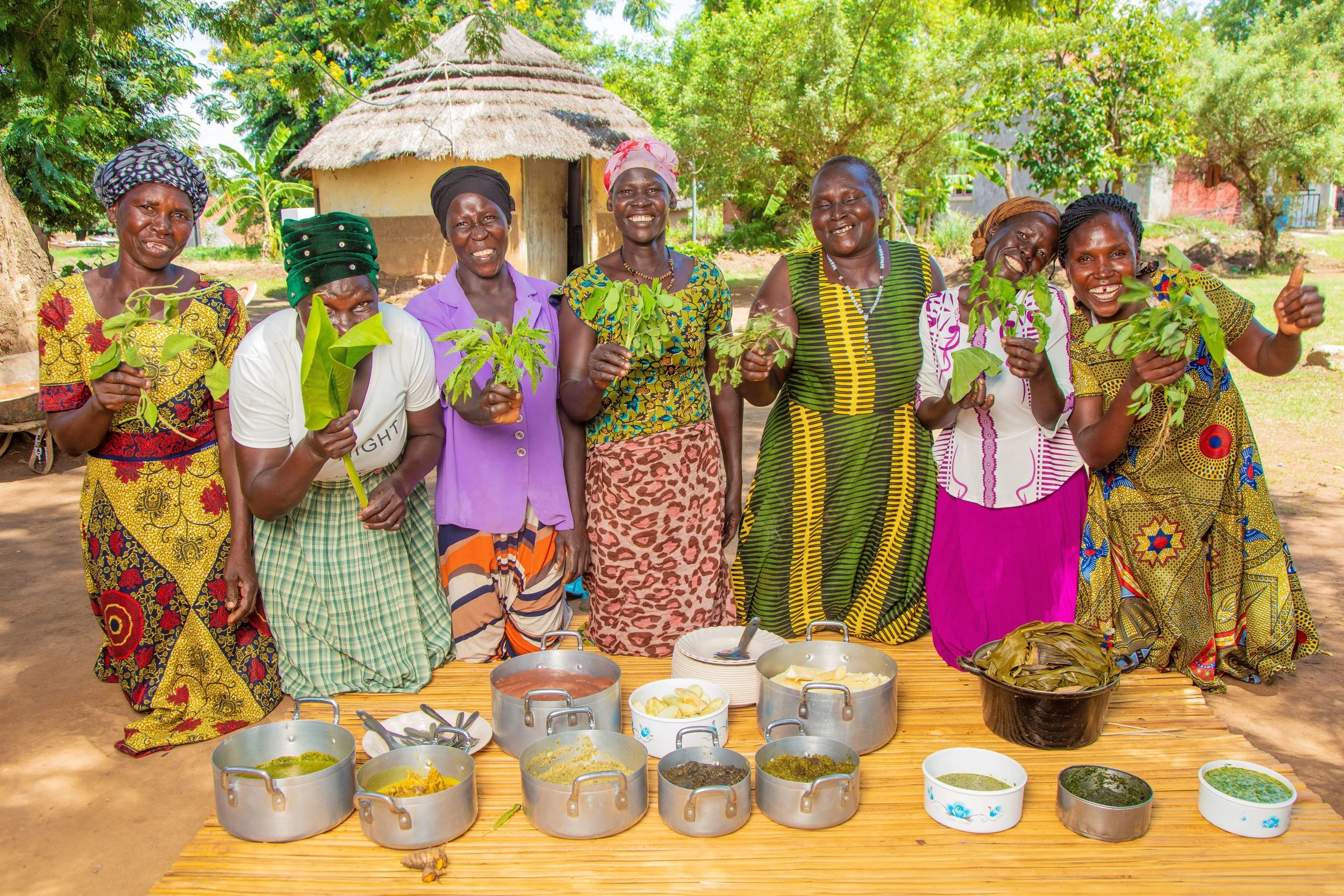
SD=HS also significantly advanced the conservation and use of Neglected and Underutilised Species (NUS), promoting more than 230 local food plants as part of its nutrition and resilience strategy. These crops - like amaranth, okra, cleome and bambara nuts - are often better adapted to local conditions, require fewer external inputs, and provide essential micronutrients. In doing so, they act as a nutritional safety net, particularly during food scarcity periods. Crop diversity itself is a cornerstone of food security: by growing a broader portfolio of species and varieties, farmers reduce risk from climate shocks and pest outbreaks while ensuring access to year-round, culturally relevant, and nutritionally rich diets. Preserving local agrobiodiversity also safeguards cultural knowledge, supports ecological resilience, and ensures that farming systems can adapt to changing climatic and market conditions over time.
The programme’s work on Farmer Seed Enterprises (FSEs) further demonstrated its scale and sustainability. Farmer led enterprises, such as the Janawatawaran Cooperative in Nepal, were supported in guided by the programme: this collective being able to increase their yearly seed production from 5.8 to 120 metric tonnes per year, and becoming financially independent. In other countries, similar transformations unfolded, where farmers were not only able to produce and market seed, but reinvested their profits into tools, irrigation, and further training. In total, over 3,700 metric tons of seed across 39 crops were produced and sold under SD=HS.
Equally transformative was SD=HS’s policy footprint. The programme contributed to 46 national and 8 international policy changes, from Nepal’s provincial seed acts and farmer variety registration frameworks to the European Patent Office’s ruling against patenting conventionally bred plants. In Zimbabwe, the government formally adopted FFSs as a national extension method and integrated farmer varieties into official breeding programs.
Despite external shocks such as COVID-19 and droughts, the programme proved resilient. FFSs continued operating with minimal external support, and their learnings spread to new communities via peer exchanges, farmer field days, and seed fairs. Women emerged not only as breeders and producers but also as community leaders and policy advocates. In Peru, Uganda, and Nepal, women-led networks formed to defend farmers’rights and seed sovereignty, supported by targeted training and policy engagement.
Behind the scenes, SD=HS was structured as a globally coordinated yet locally grounded initiative. Funded primarily by the Swedish International Development Cooperation Agency (SIDA), the programme was led by Netherlands-based Oxfam Novib at the global level, with national Oxfam offices and local partners responsible for implementation. These partners included research institutes, farmer organisations, and civil society groups with deep roots in farming communities. This decentralised model enabled the programme to tailor its approach to diverse national contexts, while ensuring that insights from the field contributed to broader policy engagement and international advocacy.
One of the most profound lessons from SD=HS is that systemic change can happen when the margins become the centre. By putting smallholders - especially women and indigenous peoples - in the lead, and by valuing diversity not just of crops but of knowledge systems, SD=HS reframed what seed system development can look like. One of its successor initiatives, Cultivating Change, aims to carry this legacy forward, embedding the lessons of farmer empowerment and seed justice in wider development and advocacy strategies.
Contact:
Nout van der Vaart, Oxfam Novib
nout.vandervaart@oxfamnovib.nl