

Transforming Nigeria’s Vegetable Markets
Fact sheet:
Funding Instrument: RVO - Sustainable Development Goals Partnership (SDGP)
Budget: €2,055,702
Timeline: July 2019 - December 2024
Implementors: East-West Seed Knowledge Transfer, Wageningen University & Research, Solidaridad West Africa, Ahmadu Bello University, Ministry of Agriculture & Forestry Kaduna State
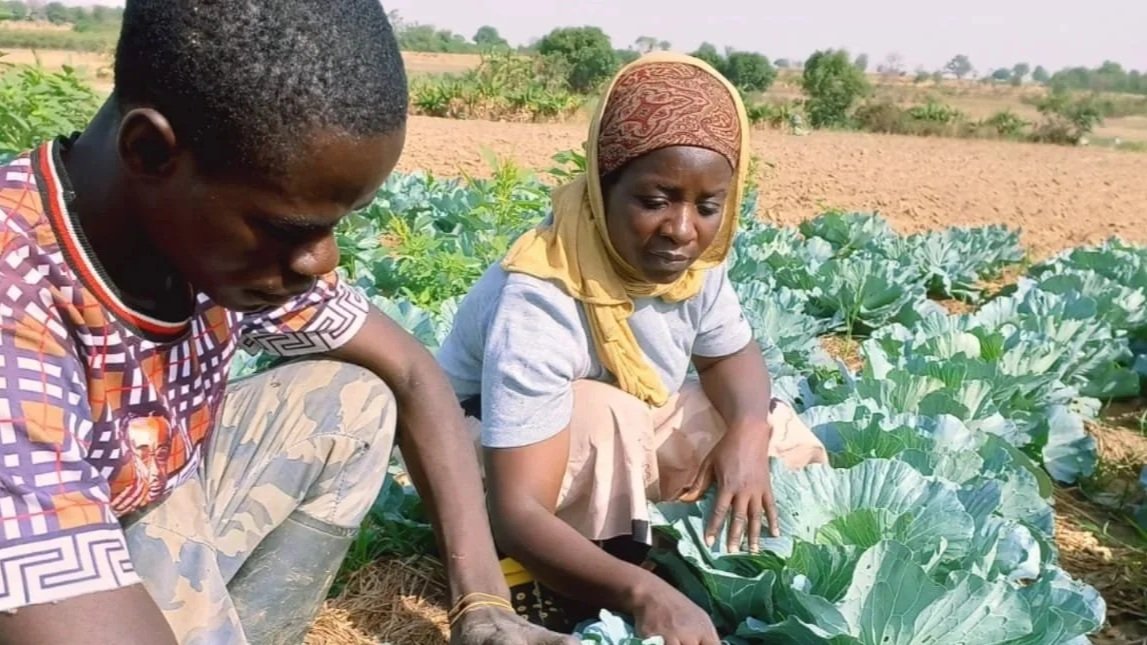
Transforming Nigeria’s Vegetable Markets (TNVM) was a five and a half-year initiative aimed at boosting the productivity and resilience of Nigeria’s vegetable sector. Funded through the RVO’s SDGP programme, TNVM brought together a diverse consortium - East-West Seed Knowledge Transfer, Wageningen University & Research, Solidaridad West Africa, Ahmadu Bello University, and the Ministry of Agriculture & Forestry of Kaduna State. Operating in northern Nigeria, the project combined practical farmer training with institutional capacity building to catalyse sustainable horticultural development. Originally targeting 136,000 farmers, the project ultimately surpassed this goal, reaching over 200,000 with improved inputs, better cultivation practices, and stronger links to the market.
At the heart of the project was a large-scale training programme anchored in over 11,000 demonstration-led sessions. These sessions not only introduced farmers to improved cultivation techniques and inputs, but also fostered peer-to-peer learning through practical field days. To ensure continued knowledge transfer beyond the life of the project, a network of central farmer trainers was established to reach additional farmers in their communities. One of TNVM’s most striking outcomes was its reach among women: despite the male-dominated nature of agriculture in northern Nigeria, approximately 22% of all the participants were women, with EWS-KT directly trained participants being 32% women.
TNVM’s structure was a good example of a public-private partnership, with each consortium member contributing from its area of strength. East-West Seed Knowledge Transfer led the implementation of farmer training and continued to showcase good agricultural practices beyond the project’s end. Wageningen University & Research focused on training agricultural professionals and embedding knowledge within Nigerian institutions, notably through the establishment of a learning site at Ahmadu Bello University. Solidaridad West Africa addressed the social dimensions of the project, introducing gender-sensitive approaches and supporting village savings and loans associations to improve access to finance. Local implementation was further supported through the Ministry of Agriculture & Forestry of Kaduna State, whose extension agents played a vital role in reaching farmers in the field. Together, these partners created a model that extended from academic training to grassroots delivery.
One of TNVM’s most impactful contributions was its success in building local institutional capacity. More than 1,000 agricultural students and extension professionals were trained through the project, helping to address Nigeria’s highly strained extension system, where one agent may be responsible for as many as 10,000 farmers. Embedding practical learning within Ahmadu Bello University proved particularly significant. Initially met with hesitation, the university’s leadership shifted course after visiting the project’s training site and recognising its quality. Following this visit, practical fieldwork at the TNVM site was made a mandatory component of graduation for agricultural students. This approach not only improved the relevance of training but also laid the foundation for a generation of graduates equipped with hands-on skills aligned with the needs of the sector.
TNVM also achieved substantial productivity gains among participating farmers. Tomato yields, for example, rose from a baseline of 7 tons per hectare to as much as 40 tons per hectare for those trained. These improvements were closely linked to the adoption of hybrid seed and complementary inputs, which many farmers had previously been unaware of or hesitant to use. Through visible demonstrations on their own plots - or those of neighbouring farmers - participants were able to see the benefits first-hand. This visibility was particularly important in contexts where literacy levels are low, where conventional training materials may be less effective. As adoption grew, so too did the local market for hybrid seed, creating new space for commercial seed suppliers and input dealers.
Like many complex development efforts, TNVM faced several operational and contextual challenges. One key difficulty was in working with agro-input dealers not just as suppliers, but as potential trainers. While many dealers were willing to support the project, getting them to provide training to visiting farmers proved challenging - time spent teaching was time not spent making sales. To adapt, TNVM engaged other shop staff to take on this role and used in-store signage to indicate where farmers could access advice. Monitoring weekly market trends also proved difficult, especially in areas where market days were irregular or unexpectedly cancelled. Another significant setback occurred when imports of certain fertilisers - essential for hybrid seed cultivation - were suddenly banned during implementation, just as farmer uptake was accelerating. These disruptions required rapid adaptation to maintain farmer confidence and continuity of production.
Among TNVM’s more unexpected outcomes was the high rate of women’s participation. While the project team had worked to ensure gender inclusion, participation by women ultimately reached levels well above what is typically achievable in northern Nigeria. Another notable success was the training-of-trainers model, which provided a structured but locally grounded approach to sustainability. By equipping a cohort of field trainers to continue outreach independently, the project created the foundations for a knowledge system that could persist without external support. What began as a time-bound intervention has, in many respects, transitioned into a self-sustaining and profitable vegetable production ecosystem. The project also succeeded in influencing academic buy-in, with TNVM’s learning site at Ahmadu Bello University now serving as an embedded and institutionally supported platform for hands-on education.
TNVM offers several important lessons for future seed sector initiatives. First, context matters - solutions must be tailored to the realities of the regions in which they are applied, and what works in one country may not translate elsewhere. Second, adoption is driven by visibility: when farmers see successful results on their own land or that of trusted peers, they are far more likely to embrace new practices. Third, the limitations of national extension systems make it essential to invest in alternative models - training farmers to become community-level trainers can help bridge these gaps. Fourth, youth are more likely to engage when the economic potential of agriculture is clearly demonstrated, and digital media are an excellent way to reach them. Fifth, cultural norms around gender must inform project design; in areas where men and women do not typically interact in professional settings, gender-matched trainers are vital. Finally, the importance of identifying and working through respected individuals within the social hierarchy cannot be overstated - local champions often prove the most effective messengers for change.
Contact:
Swaroop Nanu, EWS-KT
swaroop.nanu@eastwestseed.com
Ruth Saleh Ardzard, EWS-KT
ruth.ardzard@eastwestseed.com